
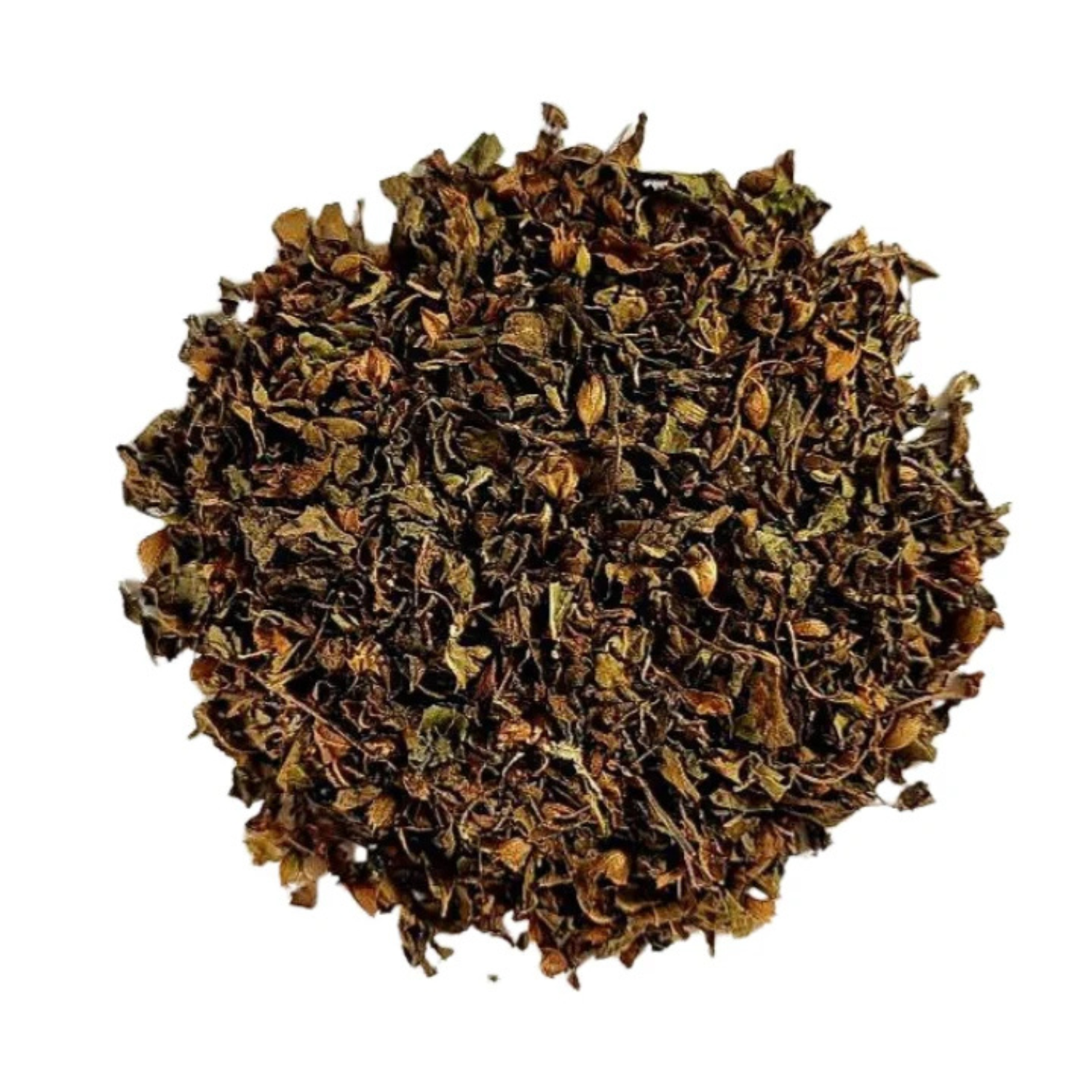
More than an herb — a household tradition
Tulsi holds genuine sacred significance in Hindu tradition, grown in homes and temples for centuries, long before it became a wellness trend. That heritage is part of what makes it different from a typical herbal tea — it’s inseparable from the culture that shaped it.
What research actually shows: tulsi has been studied for stress-hormone regulation, modest blood sugar support, and anti-inflammatory activity, largely attributed to compounds like eugenol and rosmarinic acid. It’s a genuinely well-supported adaptogen by herbal-medicine standards, though it’s not a substitute for medical treatment of any diagnosed condition.
Tulsi green tea — a natural pairing
Combining tulsi with green tea leaves is common and works well: you get green tea’s antioxidants alongside tulsi’s calming, stress-supportive quality, with a mild natural caffeine lift from the green tea base.
How to make it (recipe)
- Steep 1 tsp dried tulsi leaves in 8oz hot water, 5–7 minutes
- Optional: add a few green tea leaves for a tulsi green tea blend
- Strain and enjoy plain, or with a little honey
FAQs
What does tulsi tea actually do?
Best-supported uses are stress/cortisol support and mild anti-inflammatory and blood-sugar benefits. It’s traditionally used for immune support during seasonal changes as well.
Is tulsi tea safe daily?
Generally yes for healthy adults in normal amounts. If pregnant, breastfeeding, on blood thinners, or managing diabetes medication, check with your doctor first, since tulsi can mildly affect blood sugar and clotting.
How do I make a tulsi green tea blend at home?
Steep dried tulsi leaves with a smaller portion of green tea leaves together — start with roughly 2 parts tulsi to 1 part green tea and adjust to taste.
Reviews
There are no reviews yet.