
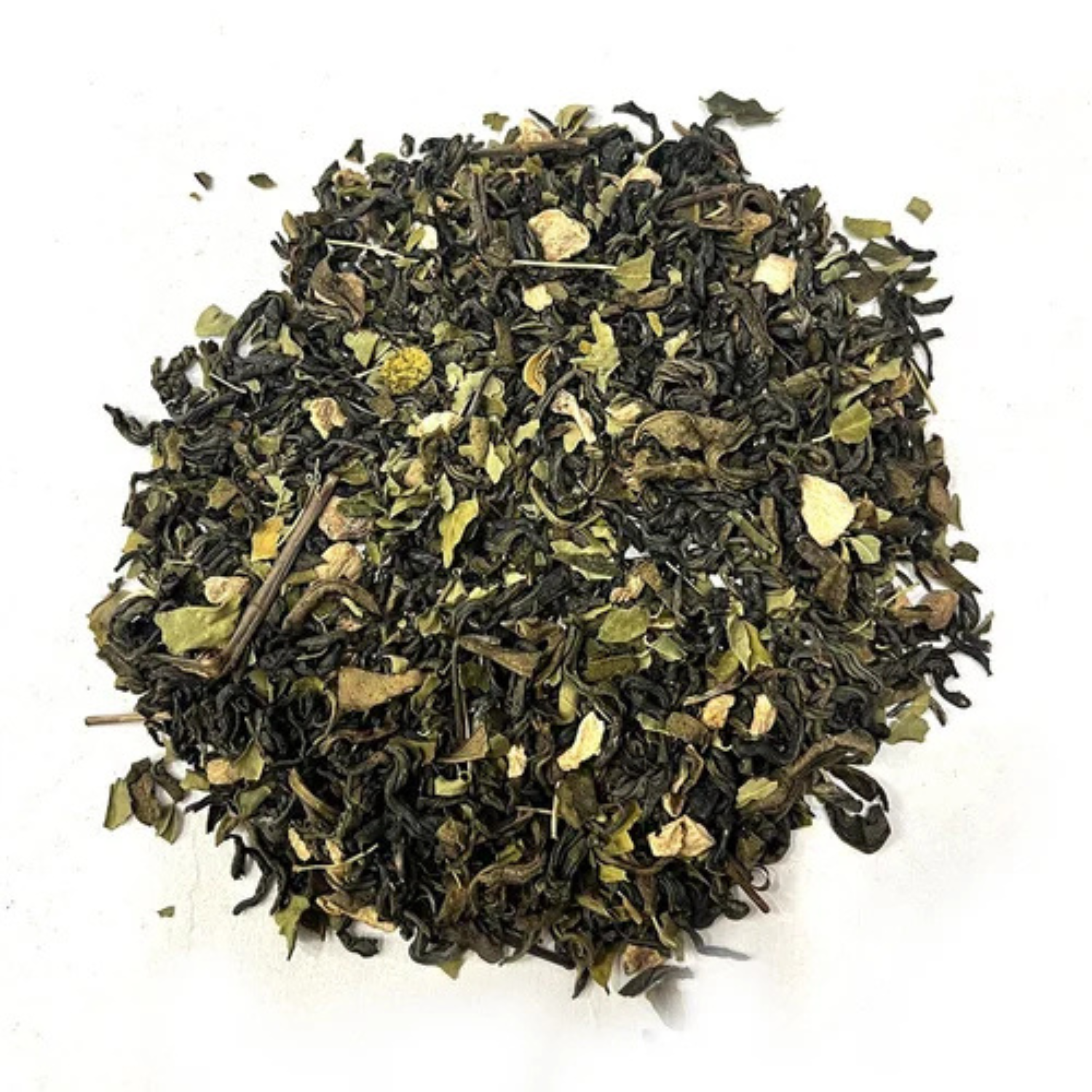
Moringa gets called a “miracle tree” a lot — here’s what’s actually true
Moringa leaves are legitimately nutrient-dense: real vitamin C, iron, and antioxidant content that holds up under testing, more so than most herbal teas on this list. That’s the honest, evidence-backed part.
What we’d rather not repeat: broad claims about curing diabetes, treating cancer, or reversing chronic disease. Those claims circulate widely online and aren’t supported by solid human research. Treat moringa tea as a genuinely nutrient-rich daily habit — not a replacement for medical treatment of anything you’ve been diagnosed with.
How to use it
Steep 5–7 minutes; the flavor is earthy and mild — works well with a little lemon or honey.
FAQs
What are the real moringa tea benefits?
Solid vitamin C, iron, and antioxidant content, and a reasonable anti-inflammatory profile from compounds like quercetin. Claims beyond general nutrition support (disease cures especially) aren’t well supported.
Can moringa tea replace iron supplements?
No — it’s a helpful dietary contributor, not a substitute for a prescribed iron supplement if you’ve been diagnosed with a deficiency. Talk to your doctor about your specific needs.
Is moringa tea safe daily?
Generally yes for most healthy adults as a normal daily tea.
Reviews
There are no reviews yet.