
There’s a silent pattern many women notice—but don’t connect.
- Irregular periods
- Sudden weight gain
- Acne that won’t go away
- Hair growing where it shouldn’t
Individually, these feel random. Together, they tell a story.
That story is often PCOS (Polycystic Ovary Syndrome)—a condition that affects millions, yet remains misunderstood.
What is PCOS? (Simple Meaning)
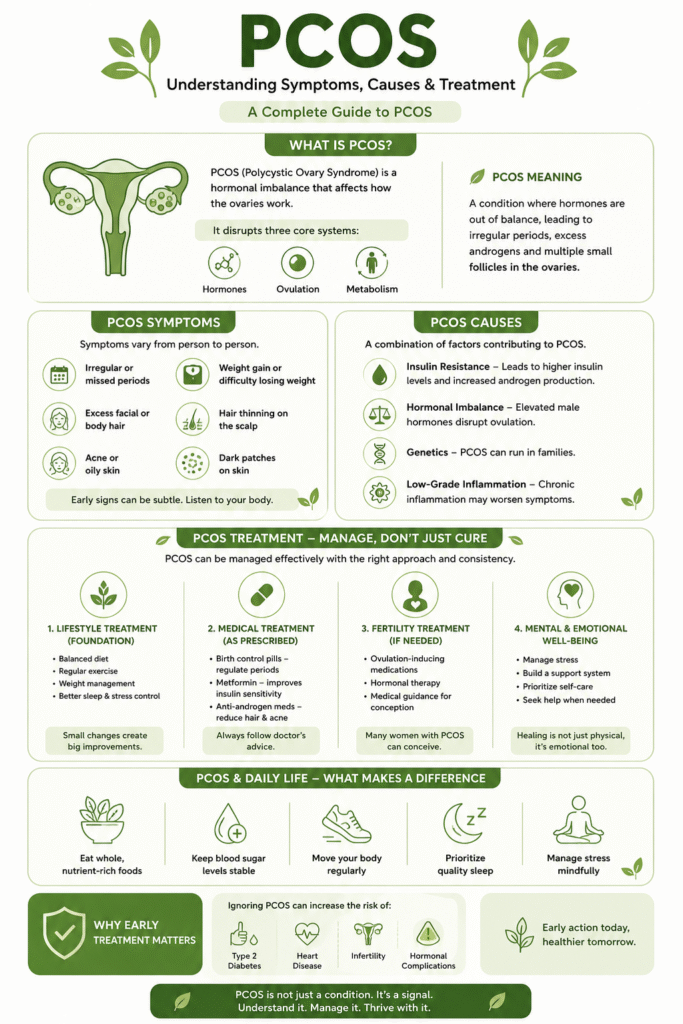
PCOS is a hormonal imbalance that affects how the ovaries work.
It disrupts three core systems in your body:
- Hormones
- Ovulation
- Metabolism
Medically, PCOS is identified when at least two of these occur:
- Irregular or absent ovulation
- High androgen (male hormone) levels
- Polycystic ovaries (multiple small follicles)
👉 In simple terms:
Your body’s hormonal rhythm is out of sync.
PCOS Symptoms: The Signs Most People Ignore
PCOS doesn’t show up the same way for everyone. That’s why it’s often missed.
Common PCOS Symptoms
- Irregular or missed periods
- Excess facial or body hair (hirsutism)
- Acne or oily skin
- Weight gain or difficulty losing weight
- Hair thinning on the scalp
- Dark patches of skin (insulin resistance sign)
These symptoms happen because of elevated androgen levels and disrupted ovulation
Early Warning Signs (Often Overlooked)
- Period cycles longer than 35 days
- Acne that doesn’t respond to normal treatment
- Fatigue or low energy
- Cravings and blood sugar fluctuations
👉 Many women normalize these signs for years.
PCOS Causes: Why It Happens
There isn’t one single cause. PCOS develops from a combination of factors:
1. Insulin Resistance
- Your body produces more insulin
- This triggers excess androgen production
- Ovulation gets disrupted
👉 This is one of the core drivers of PCOS
2. Hormonal Imbalance
- Elevated male hormones (androgens)
- Irregular egg release
3. Genetics
- PCOS often runs in families
4. Low-Grade Inflammation
- Chronic inflammation increases androgen levels
- Linked to long-term health risks
PCOS Symptoms and Treatment: The Reality Most Blogs Miss
Here’s the truth most don’t clearly explain:
👉 PCOS is not “cured” overnight. It is managed.
But the good news is:
It can be controlled effectively.
PCOS Treatment: What Actually Works
Treatment depends on your goal:
- Managing symptoms
- Improving fertility
- Regulating cycles
1. Lifestyle Treatment (Foundation)
This is always the first step.
- Balanced diet (low refined carbs)
- Regular exercise
- Weight management
Even small weight loss can improve symptoms and reduce risks
2. Medical Treatment
Doctors may prescribe:
- Birth control pills → regulate periods
- Metformin → improve insulin sensitivity
- Anti-androgen meds → reduce hair growth & acne
3. Fertility Treatment (If Needed)
- Ovulation-inducing medications
- Hormonal therapy
4. Mental & Emotional Health (Often Ignored)
PCOS is not just physical.
It can affect:
- Mood
- Confidence
- Energy levels
👉 Managing stress and sleep plays a real role in recovery.
PCOS and Daily Life: What Makes the Biggest Difference
Most people look for shortcuts.
But PCOS responds to consistency, not quick fixes.
Focus on:
- Stable blood sugar
- Whole foods over processed foods
- Regular movement (not extreme workouts)
- Sleep quality
Why Early Treatment Matters
Ignoring PCOS can increase the risk of:
- Type 2 diabetes
- Heart disease
- Infertility
- Hormonal complications
👉 Early action reduces long-term damage.
An Important Note:
Most blogs say:
“Here are symptoms, here is treatment.”
But they miss one key truth:
👉 PCOS is not just a condition. It’s a signal.
A signal that:
- Your metabolism is struggling
- Your hormones need balance
- Your lifestyle needs alignment
When you treat it like a system—not just a problem—results improve.
Final Takeaway
Lifestyle + medical support = best results
PCOS is common but often misunderstood
Symptoms vary and can be subtle
There is no instant cure—but strong management is possible