
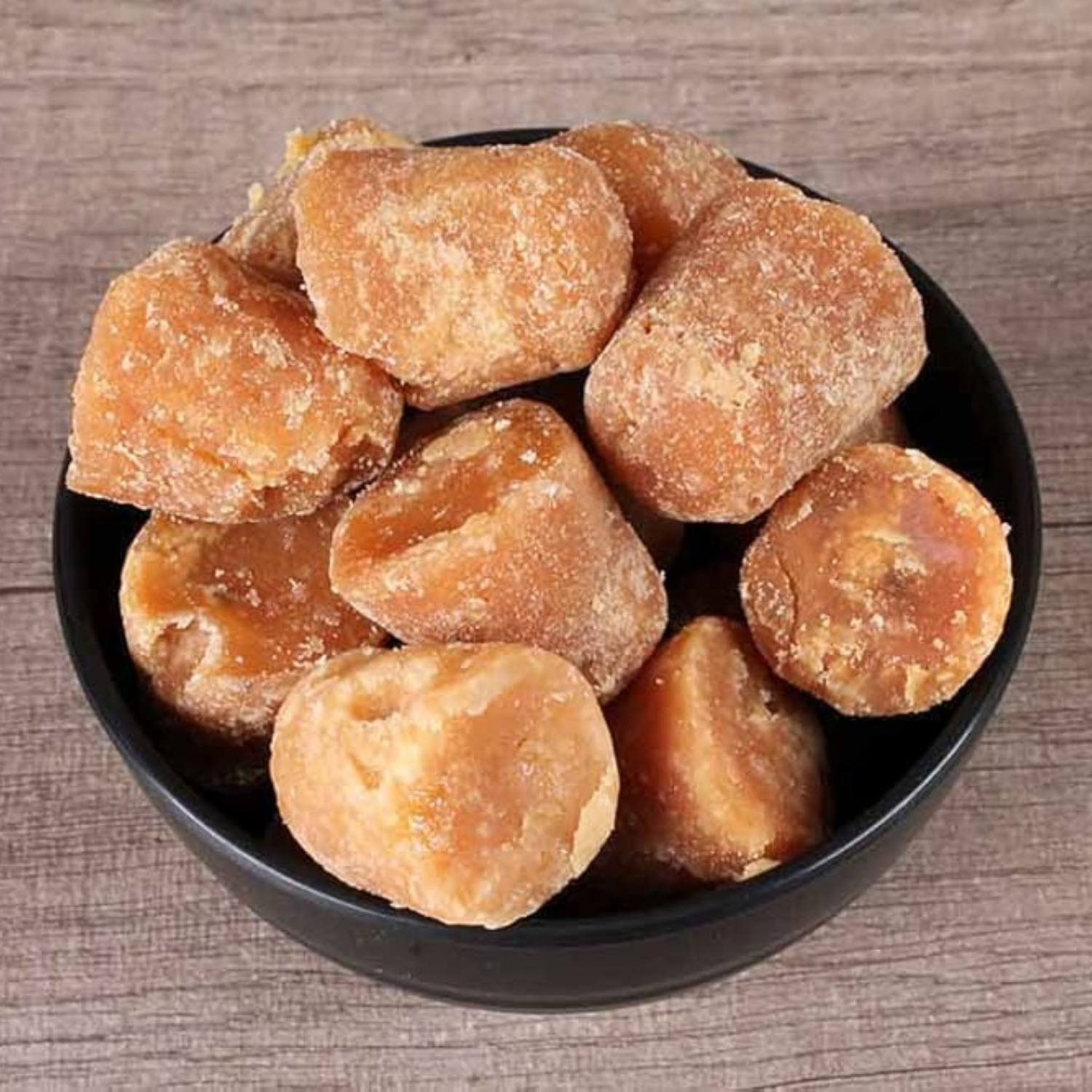
What gur actually is — no myths
Jaggery is unrefined sugar — sugarcane juice, slow-boiled down until it solidifies, with nothing stripped out. That’s it. No bleaching, no chemical clarifying. Its deep brown color isn’t a flaw to fix; it’s the sign that nothing was taken away.
We’d rather tell you the truth than sell you a myth, so here’s the honest version of two things you’ve probably heard:
- ❌ “Gur helps you lose weight” — it doesn’t. Calorie for calorie, it’s nearly identical to white sugar, and its high glycemic index means it raises blood sugar just as fast.
- ❌ “Diabetics can safely eat gur instead of sugar” — also not true. Treat it exactly like sugar if you’re managing blood sugar.
What is true, and worth knowing: gur retains meaningful iron — about 11mg per 100g, roughly 2.2mg in a typical tablespoon. In a country where iron-deficiency anemia is common among women, that’s not a marketing line, that’s a real, useful difference from empty-calorie white sugar.
Why people still reach for it
- 🍂 Deep, caramel-molasses flavor white sugar simply doesn’t have
- 🩸 A meaningful iron source — genuinely useful for anemia-prone diets
- 🍲 The traditional finish to gur wale chawal, gur ka halwa, and a warm winter drink
- 🌾 No bleaching agents (sodium hydrosulphite) — some commercial gur is chemically lightened; this isn’t
How to use it, in moderation
- 10–20g (about one small chunk or a tablespoon) a day is the traditionally recommended amount for a healthy adult — not a free-for-all
- Dissolved in warm water as a winter drink
- In traditional sweets and gur ka halwa
- As a one-for-one sugar replacement in tea, in smaller amounts than you’d use sugar since gur is often perceived as sweeter
Storage
Keep in an airtight container, cool and dry — gur absorbs moisture quickly and can turn sticky or moldy if left open.
A note for pregnancy and hot weather
Traditionally considered to have a “heating” effect (garm taseer) — many people moderate intake in summer and during pregnancy. If you’re pregnant or managing a health condition, check with your doctor before making it a daily habit.
FAQs
What are the real jaggery (gur) benefits?
The most evidence-backed one is iron content — useful for anemia-prone diets. Claims about weight loss or diabetes-friendliness don’t hold up; treat those benefits as myths, not features.
How many calories are in jaggery?
About 383 kcal per 100g — almost identical to white sugar. A more realistic single serving (one tablespoon, ~20g) is about 77 calories.
Is jaggery good for diabetics?
No. Its glycemic index (~84) is even higher than white sugar’s in some comparisons. Diabetics should treat gur exactly like sugar, not as a safe alternative.
What’s a fair jaggery price in Pakistan?
Pricing varies by region and processing, but be cautious of unusually pale or bright gur sold at a premium “organic” price — natural gur is deep brown, and pale color often signals bleaching agents were used.
Is jaggery powder different from block gur?
Not nutritionally — jaggery powder (sometimes called shakkar) is simply the same sugarcane product ground fine for easier measuring and dissolving, not a different or “more refined” product.
Reviews
There are no reviews yet.