
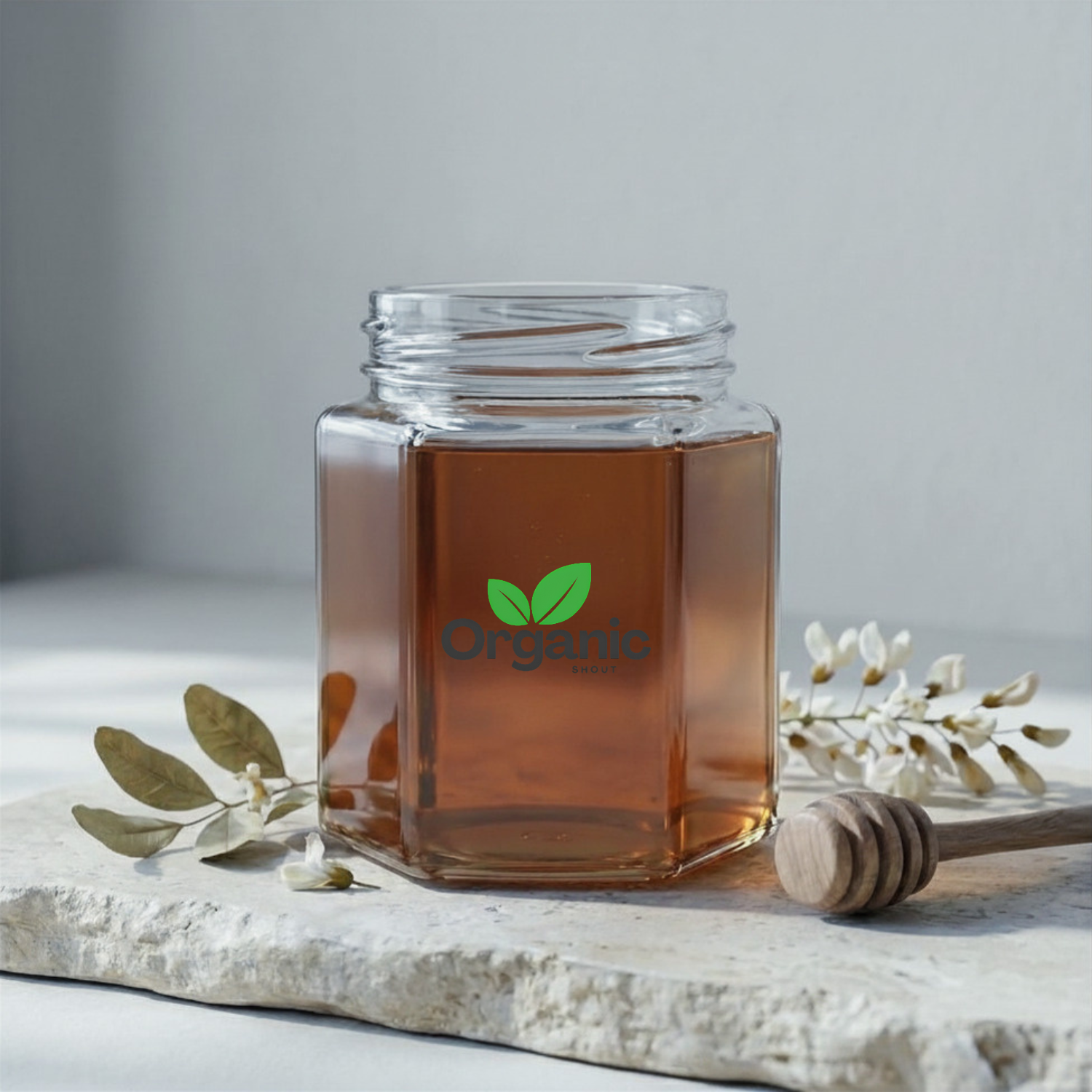
The honey that only happens once a year
Somewhere in the dry hills of Karak and Kohat, a tree most people will never see blooms for six weeks — and then goes quiet for the rest of the year.
For those six weeks, the bees have nowhere else to go. Every drop they bring back comes from one flower: the Sidr tree, known at home as beri. That’s the whole story of why this honey tastes different, pours different, and costs more than the honey sitting next to it on the shelf.
This isn’t a honey you stock up on. It’s one you wait for.
Why it feels different from the first spoon
- 🍯 Thick and slow — real Sidr honey moves like cold syrup, not a squeeze bottle
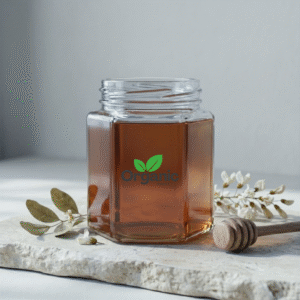
- 🟤 Deep amber, caramel notes — a woody, almost wine-like finish, not just “sweet”
- ⏳ Stays liquid for years — its natural sugar balance means it resists crystallizing, unlike most honey in your kitchen
- 🐝 One tree, one harvest, no blending
If a jar labeled “Sidr” turns cloudy and grainy within weeks — that wasn’t really Sidr. That’s the quiet, expensive-to-fake detail most sellers hope you won’t notice. We test the pollen so you don’t have to guess.
What’s actually known about it — no exaggeration
We’d rather earn your trust than your click, so here’s what the research actually says, without dressing it up:
- Sidr honey consistently tests higher in antioxidants and phenolic compounds than ordinary polyfloral honey
- Lab studies have examined its antibacterial activity against common bacteria
- Traditionally taken across Pakistan as part of a daily ritual — a spoon in warm water at sunrise, or before bed
This is food, not medicine. If you’re managing a health condition, that conversation belongs with your doctor — not a product page. We’d never ask you to trust us over them.
How people actually use it
- Stirred into warm water or tea (skip boiling — heat kills the natural enzymes)
- A spoonful on its own, especially before bed
- Drizzled over yogurt, toast, or paratha
- Passed down the way it always has been — a small evening habit shared across a household, not just a personal supplement
Storage
No fridge needed. Room temperature, lid closed, out of direct sun. If it firms up slightly in colder months, a warm (not hot) water bath brings it right back — that’s normal, not a flaw.
One honest note
Like all raw honey, this isn’t suitable for children under one year old.
FAQs
Is Sidr honey safe to eat every day?
Yes, for most adults, a spoon a day is a normal part of the traditional routine. If you have a specific health condition, check with your doctor first — same as with any concentrated food.
What’s the difference between Sidr honey and Manuka honey?
Both are monofloral honeys prized for antibacterial properties, but they come from opposite ends of the world — Sidr from the Ziziphus tree across Pakistan, Yemen, and Saudi Arabia; Manuka from New Zealand’s tea tree. Manuka has a longer clinical research history and a standardized grading system (UMF); Sidr is valued more for its rarity, taste, and centuries of traditional use in this region.
How do I know my Sidr honey (beri ka shehad) is real?
Genuine Sidr honey is thick, slow-pouring, deep amber, and resists crystallizing for a long time. If it’s thin, very pale, or turns sugary within weeks, it’s likely blended or fake. Pollen testing is the only way to confirm it with certainty — ask any seller if theirs is tested.
Why is Sidr honey more expensive than regular honey?
The Sidr tree flowers only once a year, for about six weeks, in specific hill regions. Bees can’t be “encouraged” to produce more — the harvest is capped by nature, not by the beekeeper. That scarcity is the entire reason for the price gap.
What’s a fair sidr honey price in Pakistan right now?
Genuine, tested Sidr (beri) honey typically runs in a premium range compared to ordinary honey, reflecting its once-a-year harvest. Be cautious of prices that seem too low for the “pure” or “organic” label — that’s usually the first sign of dilution.
Can I use Sidr honey on my skin, not just eat it?
Some people use raw honey topically as part of a skincare routine, but this product is formulated and tested as a food — treat any skincare use as a personal experiment, not a guarantee.
Reviews
There are no reviews yet.